




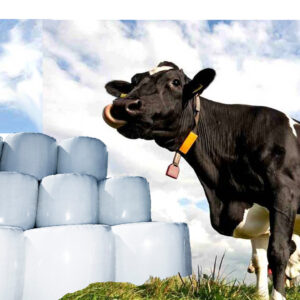
Silage it's her process fermentation of plant products with a high moisture content and under anaerobic conditions, in order to preserve the product but also to improve the nutritional value for use as animal feed. The product of silage is called silage and the crops used vary with the most common being forage plants, corn, trefoil and raw grains.
Silage is a method of preserving grass with high moisture. While in drying maintenance we lower the moisture content of the grass as quickly as possible to stop the action of the microorganisms that destroy it, with silage we maintain it with high humidity. The purpose of this process is to preserve the nutritional value of the silage throughout the time it is packed.
The production of quality silage requires minimal loss of nutrients and this is achieved by the correct fermentation process. This process depends on the following five factors:
1.Adequate humidity levels. Through the accurate measurement of moisture in the field, but also during binding with the appropriate hygrometers cutting and binding moisture is one of the important success factors.
2.Fine-fine slicing, both when cutting and when tying. For this purpose a) multi-turn cutter with discs, and b) a press with knives and the ability to tighten the ball are required.
3. Anaerobic fermentation, the absence of oxygen is the A and Z in the creation of silage of high nutritional value. In addition to baling machinery and materials, such as one high strength netting, which can properly hold a well-pressed ball and one wrapping film with great elasticity that a) presses and removes air, b) properly seals the ball so that it is not affected by external conditions, are some of the main options that the producer should focus on.
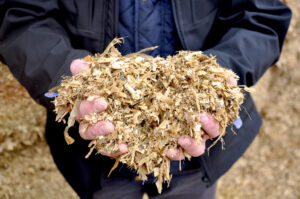
4. Pcarbohydrate (sugar) avidity. Legumes, corn, forage grasses have a high concentration of sugars but not the same, so each product needs different handling. The important thing is that the moisture before silage is below 70% for corn and even lower for clover (55-60%). Caution!!! the weeds in the field (eg broadleaf clover) do not improve the quality of the silage, on the contrary they degrade it. A percentage of 20% and above in "xenoweeds" causes fermentation problems and reduces the action of the inoculant.
5.The bacterial population, to be maintained at high levels, both the natural one and the one we supplement with the use of appropriate vaccinator. Depending on the product it is either a) incorporated into the product during bonding by spraying, and then wrapped with film when we make a ball or b) it is spread or sprayed during the harvest of the product and immediately covered with special plastic sheets, when we make syrup.
Silage as a feed determines productivity, reduces feed costs, contributes to good animal health.
 English
  Greek
Greek